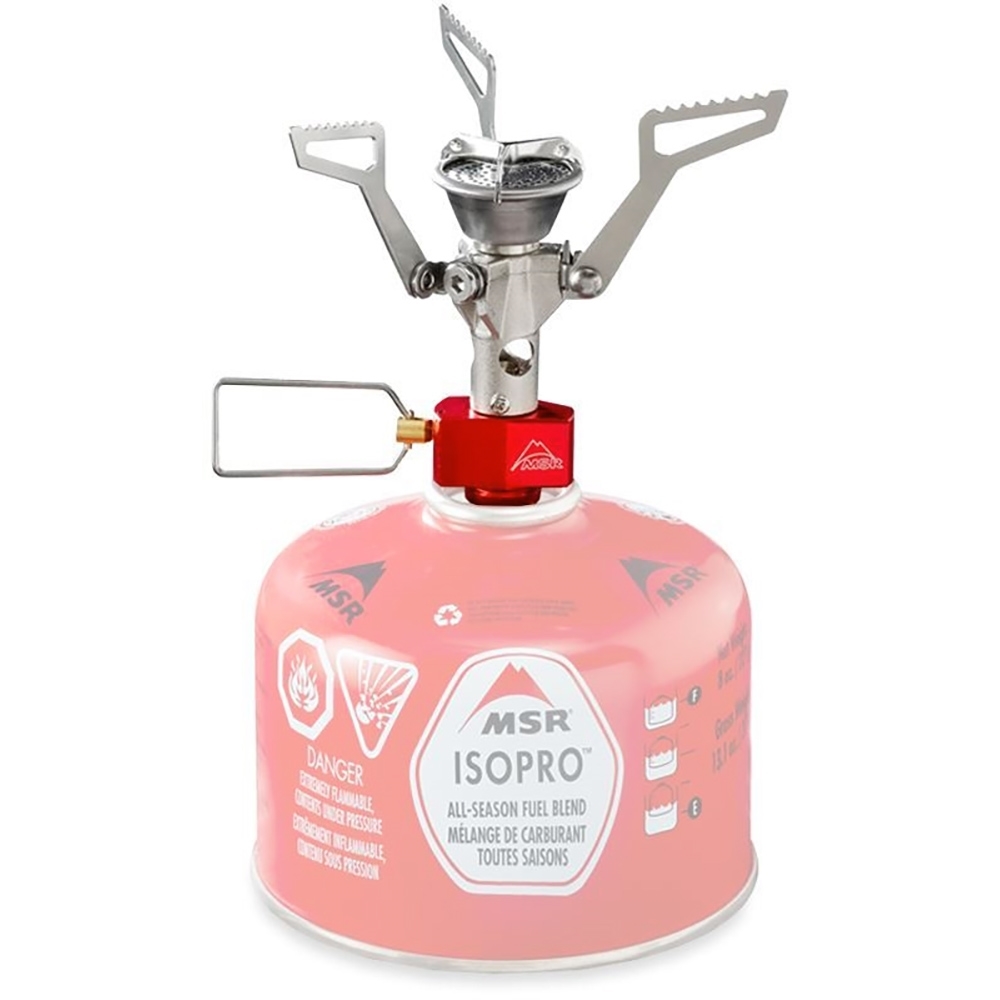
Bottom Line Up Front
The MSR PocketRocket 2 is the best entry point into serious trail cooking for Australian hikers. At 73g and $90–$120 AUD it is dramatically lighter and cheaper than integrated systems like the Jetboil Flash, and unlike the Flash it gives you genuine simmer control — meaning you can cook real food on trail, not just boil water.
The honest trade-off is convenience. The PocketRocket 2 requires a separate pot, has no integrated igniter, and packs less efficiently than an all-in-one system. If you want to pull one unit out of your pack, clip it to a canister, and have boiling water in three minutes with zero setup — the Jetboil Flash is the better choice.
But if you are budget-conscious, want cooking versatility, or are buying your first dedicated hiking stove and not yet sure how deeply you will invest in the pursuit — the PocketRocket 2 is the right starting point.
Key Specifications
| Feature | Value |
|---|---|
| Weight | 73g |
| Boil time (1L, calm) | ~3.5 minutes |
| Ignition | None — lighter required |
| Simmer control | Excellent |
| Wind resistance | Moderate (WindClip) |
| Fuel | Isobutane/propane canister |
| Pot included | No — separate purchase |
| Price (AUD) | $90–$120 |
| Australian availability | Excellent |
| Best use | Budget multi-day, trail cooking |
Who This Stove Is For
The PocketRocket 2 suits hikers who want genuine cooking capability without paying integrated system prices. It is the right choice for:
- First-time hiking stove buyers who want to invest sensibly without over-committing
- Hikers who cook real meals on trail — pasta, rice, proper food — rather than just rehydrating pouches
- Budget-conscious buyers who want a quality stove without the Jetboil Flash price tag
- Experienced ultralight hikers who want maximum cooking flexibility and are comfortable managing separate components
- Group hikers who want to pair with a larger pot for cooking for two
Do not buy the PocketRocket 2 if:
- You prioritise convenience and want an all-in-one system — the Jetboil Flash is a better fit
- You regularly hike in exposed, windy alpine environments — the WindClip provides some wind resistance but the Flash and MSR WindBurner handle extreme wind more reliably
- You want the absolute fastest water boiling system — the PocketRocket 2 boils 1L in 3.5 minutes versus the Flash’s 2.5 minutes in calm conditions
The Weight Question — Honest Accounting
At 73g the PocketRocket 2 looks dramatically lighter than the Jetboil Flash at 371g. The real comparison is more nuanced.
The PocketRocket 2 is a stove only. It needs a pot — which for a quality titanium option adds 80–100g. Total system weight with a Toaks 750ml titanium pot is approximately 160–175g — still meaningfully lighter than the Flash at 371g, but not the 300g saving the headline stove weight implies.
The packability difference is equally important. The Jetboil Flash packs everything — stove, canister, lid — into one cylindrical unit that takes up a defined space in your pack. The PocketRocket 2 with a separate titanium pot creates multiple irregular components that take up more total pack volume than the numbers suggest, even though they weigh less. A pot that does not nest cleanly with other gear adds more friction to your packing routine than the weight saving sometimes justifies.
This is not a reason to avoid the PocketRocket 2 — it is a reason to choose your pot carefully. A titanium pot sized to nest with a 100g gas canister inside it minimises the packability problem significantly. Research your pot choice before buying.
The Genuine Simmer Advantage
This is where the PocketRocket 2 meaningfully outperforms integrated systems and it is worth being direct about it.
The Jetboil Flash and MSR WindBurner are fundamentally water-boiling systems. Their simmer capability is limited — they are designed and optimised for speed, not flame control. If you want to cook rice, pasta, a proper curry, or anything requiring sustained low heat, neither integrated system serves you well.
The PocketRocket 2 has a precision flame control valve that goes from full torch to a genuine low simmer. You can cook real food — not just rehydrate pouches — with meaningful control over the heat. For hikers who want to eat properly on trail rather than surviving on freeze-dried meals, this changes the entire cooking experience.
Combined with a wider pot — say a 900ml titanium pot or a lightweight aluminium pan — the PocketRocket 2 becomes a versatile trail kitchen rather than just a water boiler. For a hiking couple sharing cooking duties over a week-long trip, that versatility matters considerably.
No Igniter — The Lighter Question
The PocketRocket 2 has no integrated piezo igniter. You need a lighter every time.
This is a non-issue in practice — with one important caveat. If you forget a lighter or it stops working, you cannot ignite the stove. The mitigation is simple but must be deliberate: always carry two lighters. Keep the primary accessible. Keep the spare in a sealed, waterproof location in your pack — a ziplock bag inside a secure pocket — and do not touch it unless you absolutely need it.
Experienced hikers treat this as standard practice regardless of stove choice. With two lighters the lack of integrated ignition is genuinely irrelevant. Without that habit it becomes a real problem on a multi-day trip.
The upside of no integrated igniter is reliability. There is nothing electronic to fail, no moving parts beyond the gas valve, and one less component that can break in the field. The PocketRocket 2’s simplicity is a direct result of this design choice.
Wind Performance — Adequate, Not Exceptional
The PocketRocket 2 has MSR’s WindClip windshield — a three-way fin on the burner head that provides reasonable wind protection in moderate conditions. It is significantly better than a standard canister stove with no wind protection.
In typical Australian hiking conditions — established trails with reasonable shelter — the WindClip handles the job adequately. In genuinely exposed environments — alpine NSW in winter, Tasmanian ridgelines, elevated sections of the Larapinta — you will notice the PocketRocket 2 working harder than an integrated system. Boil times extend in wind and fuel consumption increases.
The practical answer: find natural wind shelter when cooking. A rocky outcrop, the lee side of a ridge, the inside of your tent vestibule — small amounts of shelter make a significant difference to canister stove performance regardless of windshield design.
MSR PocketRocket 2 vs Jetboil Flash vs Soto Windmaster
| Feature | PocketRocket 2 | Jetboil Flash | Soto Windmaster |
|---|---|---|---|
| Stove weight | 73g | 371g | 67g |
| System weight (with pot) | ~160–175g | 371g (included) | ~150–170g |
| Boil time (1L, calm) | 3.5 mins | ~2.5 mins | ~2.5 mins |
| Integrated system | ❌ | ✅ | ❌ |
| Igniter | ❌ None | ✅ Piezo | ✅ Micro |
| Simmer control | ✅ Excellent | Limited | Good |
| Wind resistance | Moderate | Good | Excellent |
| Price (AUD) | $90–$120 | $180–$220 | $90–$130 |
| Best for | Budget, cooking | Convenience | Ultralight, wind |
Australian Availability
The MSR PocketRocket 2 is one of the most widely available hiking stoves in Australia. You will find it at Paddy Pallin, Wild Earth, Snowys, Anaconda, and on Amazon AU. Pricing is typically $90–$120 AUD — the most accessible price point of any quality canister stove in the Australian market.
Compatible isobutane/propane canisters are stocked at the same retailers. A 100g canister costs approximately $8–$12 AUD and provides around 60 minutes of burn time — enough for 7–10 days of solo trail use for hikers primarily boiling water.
Verdict
The MSR PocketRocket 2 is the best first hiking stove for Australian buyers and the right choice for anyone who wants genuine cooking capability at a budget-friendly price. It is lighter and cheaper than the Jetboil Flash, more versatile than any integrated system, and built by one of the most trusted brands in outdoor equipment.
The trade-offs are real — no integrated igniter, separate pot required, less convenient packing — but none of them are deal-breakers with the right habits and pot choice. Always carry two lighters. Choose a pot that nests efficiently. Beyond that the PocketRocket 2 gets out of your way and lets you cook.
Best for: Budget buyers, first hiking stove, trail cooking, hikers who want flame control, group cooking, Blue Mountains, Overland Track, Larapinta
Not for: Convenience-first hikers, those wanting all-in-one systems, exposed alpine conditions where wind resistance is critical
Check price on Amazon
Check price on eBay
TrailKitLab — written by hikers, for hikers
4 thoughts on “MSR PocketRocket 2 Review – The Best Budget Stove for Australian Hikers?”