Bottom Line Up Front
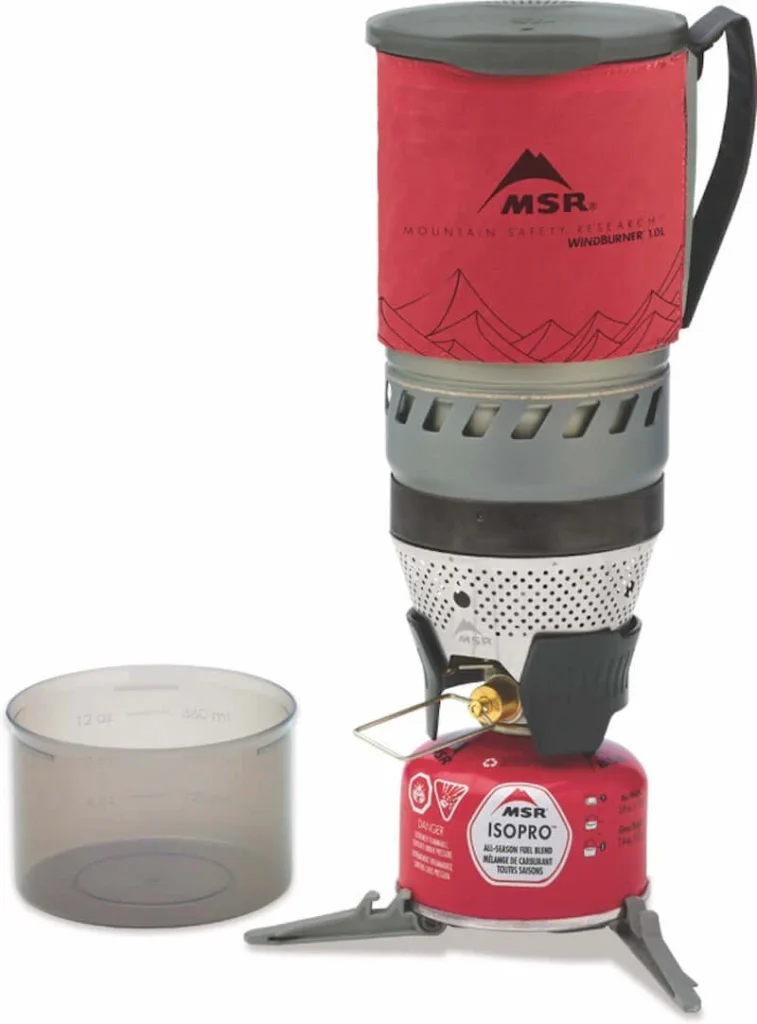
The MSR WindBurner is an excellent integrated canister stove with one defining strength: genuinely windproof performance through its enclosed radiant burner design. It boils water fast, uses fuel efficiently, and is built to MSR’s characteristically robust standard.
The honest question for Australian hikers is whether that wind resistance advantage over the Jetboil Flash justifies the higher price and the absence of an integrated igniter. In most Australian three-season conditions — the Overland Track, Larapinta, Blue Mountains — the answer is probably not. The Jetboil Flash handles these conditions adequately and costs $80–$100 less.
Where the WindBurner earns its premium is in genuinely exposed conditions: above treeline in the Australian Alps in winter, Tasmanian alpine ridges in shoulder season, or any environment where sustained wind makes stove ignition and operation consistently difficult. If that describes your hiking, the WindBurner is the right choice. If it doesn’t, the Jetboil Flash is the smarter buy.
Key Specifications
| Feature | Value |
|---|---|
| System weight | 432g |
| Capacity | 1L |
| Boil time (500ml, calm) | ~2.5 minutes |
| Boil time (500ml, windy) | ~2.5 minutes |
| Ignition | None — lighter required |
| Simmer control | Very limited |
| Radiant burner | ✅ Yes — enclosed windproof design |
| Pressure regulator | ✅ Yes |
| Fuel | Isobutane/propane canister |
| Price (AUD) | ~$280–$320 |
| Australian availability | Excellent |
| Best use | Alpine, exposed terrain, windy conditions |
Who This Stove Is For
The WindBurner is built for hikers who regularly cook in exposed, windy conditions where other stoves struggle to maintain consistent performance.
It suits:
- Alpine hikers in the Australian Alps, Tasmanian highlands, or New Zealand’s South Island where wind is a genuine factor
- Ski tourers and winter campers where cold temperatures reduce canister pressure and wind is sustained
- Hikers who want maximum fuel efficiency and consistent boil times regardless of conditions
- Those who prefer a stove with no electronic components to fail
Do not buy the WindBurner if:
- You primarily hike in sheltered or moderate conditions — the Jetboil Flash delivers equivalent performance at $80–$100 less
- You want an integrated igniter for convenience — the WindBurner has none and always requires a separate lighter
- You want any simmer capability — the WindBurner’s flame control is essentially on or off
- You are buying your first hiking stove — the Jetboil Flash is a more accessible starting point
The Windproof Radiant Burner — What It Actually Means
The WindBurner’s defining feature is its radiant burner enclosed within a metal cone that shields the flame almost completely from wind. Unlike conventional canister stoves where the flame is exposed, the WindBurner’s burner head sits recessed inside the system — wind cannot reach it.
In testing and real-world use this delivers consistent boil times regardless of wind conditions. Where the Jetboil Flash’s boil time can extend significantly in a 15–20km/h wind, the WindBurner’s performance remains essentially unchanged.
The honest Australian context: in most established trail conditions the wind resistance advantage over the Jetboil Flash is less significant than it might appear. Once either stove is lit, sustained wind strong enough to extinguish or significantly degrade performance is uncommon outside genuinely exposed alpine environments. The Jetboil Flash is more wind resistant than a standard canister stove and handles typical Australian trail conditions adequately.
Where the WindBurner’s advantage is real and meaningful is in reliably exposed conditions — cooking on an open ridge in the Australian Alps, a Tasmanian plateau campsite with overnight wind, or ski touring approaches where you are cooking in the open without natural shelter. In these environments the WindBurner’s consistency is genuinely valuable.
No Igniter — The Lighter Requirement
The WindBurner has no integrated piezo igniter. Every use requires a separate lighter.
For some hikers this is a dealbreaker — the convenience of a built-in igniter is real and the Jetboil Flash’s piezo is a genuine advantage in day-to-day use. For others the absence of an igniter is a reliability feature — there is nothing electronic to fail, no moving parts beyond the gas valve, one less component that can malfunction on a remote trip.
The practical requirement is simple: always carry a backup lighter regardless of which stove you use. With a lighter the WindBurner functions perfectly. The igniter is a convenience difference, not a capability difference.
If the integrated igniter matters to you — and for most hikers it reasonably does — the Jetboil Flash is the better choice on this factor alone. The WindBurner needs to justify its premium through other means, primarily wind performance.
Fuel Efficiency — A Genuine Advantage
The WindBurner’s radiant burner and heat exchanger combination is among the most fuel-efficient integrated stove systems available. The enclosed design and pressure regulator ensure consistent gas delivery regardless of canister fill level or temperature — meaning the stove performs consistently from a full canister to nearly empty.
Australian hiker testing found a 100g canister lasting around 5–7 days of typical solo trail use — consistent with the Jetboil Flash and competitive with any integrated system. In cold alpine conditions where conventional stoves lose efficiency as canister pressure drops, the WindBurner’s pressure regulator maintains performance more reliably than the Flash.
Simmer Control — Essentially None
The WindBurner’s flame control is extremely limited. It is fundamentally a water-boiling system — designed to operate at high heat efficiently, not to simmer or cook real food with controlled flame.
If you want to cook anything beyond rehydrating meals or boiling water — pasta, rice, real food — the WindBurner is not the right tool. A separate stove like the MSR PocketRocket 2 or Soto Windmaster with a wide pot gives genuine cooking capability that no integrated system provides.
For the majority of Australian multi-day hikers rehydrating meals and making hot drinks, this limitation is irrelevant. Know your cooking style before choosing.
MSR WindBurner vs Jetboil Flash — The Definitive Comparison
For most Australian buyers this is the core decision. Both are excellent integrated stoves. Here is the honest head to head:
| Feature | MSR WindBurner | Jetboil Flash |
|---|---|---|
| System weight | 432g | 371g |
| Boil time (calm) | ~2.5 mins | ~2.5 mins |
| Boil time (windy) | ~2.5 mins | ~4–6 mins |
| Integrated igniter | ❌ None | ✅ Piezo |
| Wind resistance | ✅ Exceptional | Good |
| Simmer control | Very limited | Limited |
| Fuel efficiency | ✅ Excellent | Good |
| Price (AUD) | $280–$320 | $180–$220 |
| Best for | Alpine, exposed terrain | General multi-day |
The WindBurner is heavier, more expensive, and lacks an igniter. It wins on wind resistance and fuel efficiency in cold conditions. For most Australian hikers the Jetboil Flash is the more practical and better value choice. For hikers who regularly operate in genuinely exposed conditions, the WindBurner earns its premium.
For a full comparison see our MSR WindBurner vs Jetboil Flash guide.
Australian Trail Recommendations
WindBurner — best suited for:
- Australian Alps winter (NSW/VIC) — Main Range, Kosciuszko plateau, exposed ridgelines where wind is sustained
- Tasmanian alpine routes in shoulder season — Cradle Mountain plateau, Western Arthurs where ridge camping exposes you to Roaring Forties wind
- New Zealand South Island — alpine approaches, exposed Great Walks sections in variable weather
- Ski touring and winter camping anywhere in Australia or New Zealand where cold and wind combine
Consider the Jetboil Flash instead for:
- Overland Track, Larapinta, Three Capes, Blue Mountains — established trails where wind is occasional rather than sustained
- Any three-season Australian hiking where conditions are moderate
Australian Availability
The MSR WindBurner is widely available at Paddy Pallin, Wild Earth, Snowys, and Anaconda, and on Amazon AU. The 1L personal system retails at approximately $280–$320 AUD. The Duo system (1.8L for two people) is also available at around $400–$450 AUD for hiking pairs who want WindBurner performance for two.
Verdict
The MSR WindBurner is a genuinely excellent stove for a specific buyer — the Australian hiker who regularly cooks in exposed alpine conditions where wind resistance is a real factor, not an occasional inconvenience. In those conditions it outperforms the Jetboil Flash meaningfully and the price premium is justified.
For the majority of Australian hikers on three-season established trails, the Jetboil Flash delivers equivalent real-world performance at a lower price with the added convenience of an integrated igniter. The WindBurner is the specialist; the Flash is the all-rounder.
Choose the WindBurner if wind is a consistent factor in your hiking environment. Choose the Jetboil Flash if it is not.
Best for: Alpine hiking, ski touring, exposed conditions, Australian Alps, Tasmanian ridges, New Zealand South Island, winter camping
Not for: General three-season Australian hiking, budget-conscious buyers, hikers who want an integrated igniter, trail cooking beyond boiling water
Check price on Amazon
Check price on eBay
TrailKitLab — written by hikers, for hikers