Bottom Line Up Front
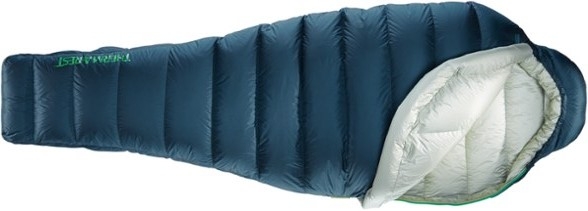
The Thermarest Hyperion is the most technically refined ultralight sleeping bag available to Australian hikers. At around 400g it is lighter than the Sea to Summit Spark, uses higher quality materials, and carries a price tag to match. For hikers who want the absolute best and are willing to pay for it, the Hyperion earns its reputation.
The honest comparison with the Sea to Summit Spark is straightforward: both are excellent bags, both cover Australian three-season conditions comfortably, and both are priced in a similar bracket. The Hyperion is the more premium product with marginally better materials and a slightly lower weight. If you are already spending $500–$600 on the Spark, spending an extra $100–$200 for the Hyperion is easy to justify given how important a sleeping bag is to a multi-day trip.
If budget is the deciding factor, the Spark is not a compromise — it is a genuinely excellent bag. But if you want the best available, the Hyperion is it.
Key Specifications
| Feature | Value |
|---|---|
| Weight | ~400g (regular) |
| Fill | 900 fill power Nikwax Hydrophobic Down |
| Shell fabric | 10D Pertex Quantum Pro |
| Temperature rating (lower limit) | -6°C |
| Temperature rating (comfort) | ~-1°C |
| Zip length | Half length |
| Price (AUD) | $650–$800 |
| Best use | Ultralight multi-day backpacking |
| Australian availability | Amazon AU, Snowys, Wild Earth |
Who This Bag Is For
The Hyperion is built for serious multi-day hikers who prioritise the best possible warmth-to-weight ratio and are willing to invest accordingly. It is the kind of purchase that makes sense when you have done enough hiking to know exactly what you need and have decided that quality is non-negotiable.
It suits:
- Experienced ultralight backpackers who have refined their kit over multiple trips
- Hikers doing demanding multi-day routes — Overland Track, Larapinta, alpine NSW, New Zealand South Island
- Anyone who is already considering the Sea to Summit Spark and wants to understand whether the premium is worth it
- Thru-hikers and long distance walkers where every gram compounds over weeks
Do not buy this bag if:
- You are new to multi-day hiking and unsure how frequently you will use premium kit — the Spark or a mid-range bag is a more sensible starting point
- You primarily hike in warm Australian conditions where a -6°C bag is overkill
- Budget is a genuine constraint — the Sea to Summit Spark covers the same Australian conditions at a lower price point
- You are a car camper or occasional overnighter — this level of investment is not justified for infrequent use
What Makes the Hyperion Stand Out
900 Fill Power Down
The Hyperion uses 900 fill power Nikwax Hydrophobic Down — among the highest fill power available in a production sleeping bag. Fill power measures how much space one ounce of down occupies when fully lofted. Higher fill power means more warmth per gram, which is why the Hyperion achieves a -6°C lower limit rating at just 400g — a warmth-to-weight ratio that very few bags match.
The Nikwax hydrophobic treatment addresses down’s traditional weakness — moisture. When down gets wet it loses its loft and insulating ability rapidly, and on a multi-day trip a damp sleeping bag is genuinely serious. A wet bag in cold conditions is a safety issue, not just a discomfort issue. The treatment does not make the bag waterproof, but it significantly slows moisture absorption and helps the down maintain loft longer in damp conditions.
In Australian conditions this matters less than in, say, a Scottish winter — most Australian multi-day hiking environments are relatively dry. But on the Overland Track in autumn or in an alpine NSW environment where tent condensation builds over multiple nights, any moisture resistance is a genuine advantage.
The practical lesson remains: do not rely on hydrophobic treatment as your moisture management strategy. Keep your sleeping bag in a dry bag inside your pack. The treatment is insurance, not a substitute for good practice.
Minimalist Design — Intentionally
The Hyperion strips weight from every possible area. The half-length zip rather than full-length saves meaningful grams without compromising usability — you do not need to fully unzip a sleeping bag in normal use. The extremely thin 10D Pertex Quantum Pro shell feels almost impossibly light in the hand.
Some hikers find this minimalism concerning — it looks fragile. In practice the Pertex Quantum Pro fabric is specifically engineered for sleeping bag use and handles normal trail conditions well. It requires reasonable care — avoid dragging it across rough ground — but it is not delicate in the way the weight suggests.
The stripped-down design is a strength for weight-conscious hikers. Everything that is there serves a purpose. Nothing extra has been included.
Temperature Rating for Australian Conditions
At -6°C lower limit and approximately -1°C comfort rating, the Hyperion covers virtually all Australian three-season hiking conditions comfortably for average sleepers. The Overland Track in shoulder season, the Larapinta at night, alpine NSW in autumn, New Zealand’s Great Walks — the Hyperion handles all of these with margin to spare.
The only conditions where it becomes marginal are serious alpine winter environments — high Snowies in winter, Tasmanian alpine routes in June/July, or the New Zealand South Island in deep winter. In these conditions cold sleepers may want a warmer bag. For the vast majority of Australian hiking the Hyperion is more than adequate.
Moisture and Sleeping Bags — The Honest Reality
This is worth addressing directly because it affects every sleeping bag decision regardless of brand.
A wet sleeping bag on a multi-day trip is a genuine problem. Down loses its insulating properties when damp, and once wet it is very difficult to dry on trail unless you have warm sun and time to unpack and air it out. Over multiple days in a tent, condensation builds — from breathing, from body moisture, from temperature differentials between the inside and outside of your tent. This is unavoidable.
The hydrophobic treatment on the Hyperion slows this process. The Sea to Summit Spark’s Ultra-Dry treatment does the same. Neither bag is waterproof.
The practical answer is twofold: use a quality dry bag inside your pack for your sleeping bag, and choose a tent with good ventilation to reduce condensation buildup overnight. These habits matter more than which specific hydrophobic treatment your bag uses.
Thermarest Hyperion vs Sea to Summit Spark
These are the two most directly comparable premium ultralight sleeping bags available in Australia.
| Feature | Thermarest Hyperion | Sea to Summit Spark |
|---|---|---|
| Weight | ~400g | ~490g |
| Fill power | 900 | 850+ |
| Lower limit | -6°C | -7°C |
| Shell fabric | 10D Pertex Quantum Pro | 10D nylon |
| Zip | Half length | Full length |
| Hydrophobic treatment | Nikwax | Ultra-Dry |
| Australian price | $650–$800 | $500–$600 |
| Australian brand | No | Yes — Perth 1991 |
| Best for | Maximum quality | Value + Australian brand |
The weight difference of 90g is real but not meaningful at this level — both bags are already extremely light and 90g is not a factor on trail. The Hyperion uses marginally better materials and fill power. The Sea to Summit Spark is an Australian brand with strong local credentials and costs $100–$200 less.
If you want the most premium product available, buy the Hyperion. If you want an excellent bag at a better price from an Australian brand, buy the Spark. Both cover the same Australian conditions and both will last years of serious use.
Australian Availability
The Thermarest Hyperion is available on Amazon AU, Snowys, and Wild Earth. Pricing ranges from $650–$800 AUD depending on size and retailer. It is worth checking current availability as stock can be limited — if Amazon AU is out of stock, Snowys typically carries consistent inventory.
Verdict
The Thermarest Hyperion is the most technically accomplished ultralight sleeping bag available to Australian hikers. It earns its price tag through genuinely superior materials, exceptional warmth-to-weight ratio, and a refined minimalist design that removes everything unnecessary.
For experienced hikers who have decided they want the best and are willing to invest — this is it. For everyone else, the Sea to Summit Spark covers the same ground at a lower price and with the credibility of an Australian brand behind it.
Best for: Experienced ultralight hikers, multi-day routes in varied conditions, hikers who prioritise quality above all else, Overland Track, Larapinta, NZ Great Walks
Not for: Beginners, occasional hikers, those who can’t justify the premium over the Sea to Summit Spark, warm weather only hiking
TrailKitLab — written by hikers, for hikers
1 thought on “Thermarest Hyperion Review – The Most Premium Ultralight Sleeping Bag for Australian Hikers?”