Bottom Line Up Front
The Gregory Zulu 55 is a serious load-hauling pack built for multi-day hikers who prioritise carrying comfort over chasing the lightest possible base weight. At 1.91kg it is not an ultralight pack — but it was never trying to be. What it delivers instead is a suspension system and hip belt that genuinely manages heavy loads across multiple days, which matters far more than pack weight when you are carrying 15–20kg through the Tasmanian wilderness or across the Larapinta.
It is well stocked in Australia, reasonably priced, and built to last. For serious multi-day hikers who want a pack that works hard without destroying their body, it belongs on the shortlist.
Key Specifications
| Feature | Value |
|---|---|
| Weight | 1.91 kg |
| Capacity | 55 L |
| Frame | FreeFloat dynamic suspension |
| Back panel | Full-length tensioned mesh |
| Torso adjustment | 3.5 inches (custom fit) |
| Max carry weight | 22.7 kg |
| Price (AUD) | $400-$500 |
| Materials | Recycled polyester |
| Best use | Multi-day backpacking, 3–7 days |
Who This Pack Is For
The Zulu 55 is aimed squarely at multi-day hikers carrying real loads — the kind of person doing the Overland Track in Tasmania, the Larapinta Trail in the NT, or a week in New Zealand’s South Island with full camping kit. It handles weight well, fits a wide range of body sizes thanks to its adjustable torso system, and is robust enough to take the kind of punishment that multi-day hiking actually involves.
It also works well for hikers heading to New Zealand for a week or two — enough capacity for a well-organised kit, handles varied terrain, and fits comfortably as carry-on luggage on domestic flights when packed down.
Do not buy this pack if:
- You are a beginner doing day hikes or occasional overnighters — it is overkill and the weight penalty is not worth it at this level
- You are chasing the lowest possible base weight — at 1.91kg the pack itself is a significant weight item; the Osprey Exos 58 at 1.18kg or the Granite Gear Crown3 60 at 0.9kg are better choices if weight is your primary concern
- You need expedition-level capacity — 55L will constrain you on longer remote trips where food, fuel, and technical gear push your volume requirements higher
- You are a long-term travel backpacker living out of hostels for months — the pack structure is optimised for camping kit, not travel wardrobes
What Makes It Stand Out
The FreeFloat Hip Belt
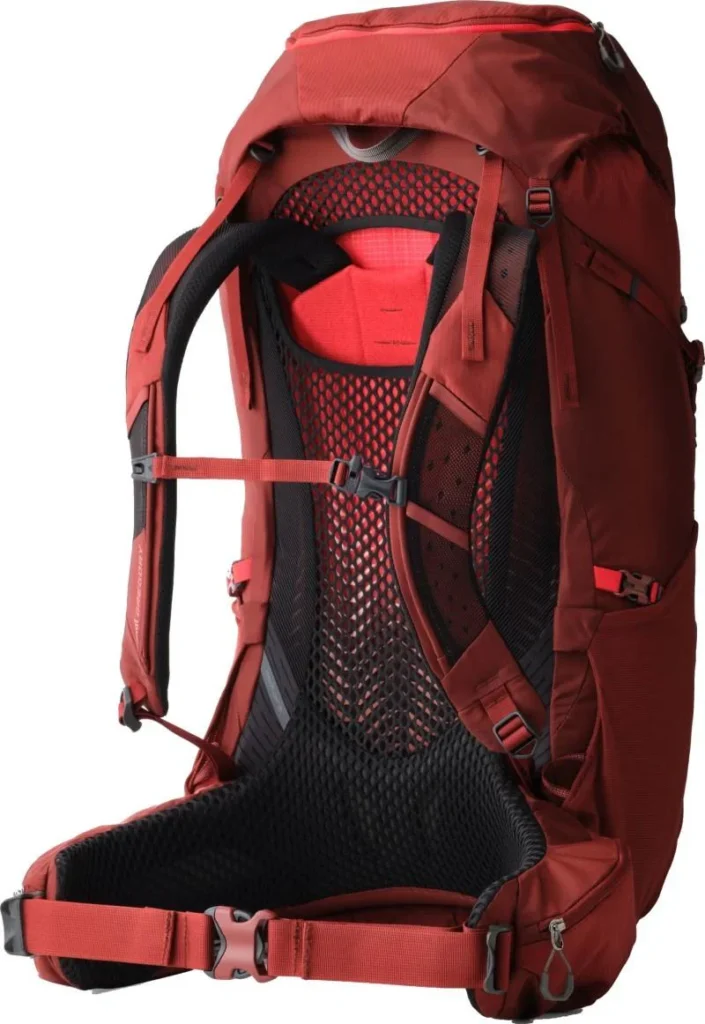
This is the most important feature on any multi-day pack and Gregory has built one of the best in this price range. The FreeFloat hip belt links to the frame via a panel designed to move and flex with your natural walking motion rather than fighting it. The 3D design conforms to your hip shape, and the padding is generous enough to handle heavy loads without creating pressure points.
For anyone who has carried serious weight over multiple days — military, expedition, or otherwise — the hip belt is where the battle is won or lost. A good hip belt transfers load from your shoulders to your hips, the stronger muscle group, which is critical when you are carrying 15kg or more across a full day. The Zulu’s hip belt does this properly. It also has oversized zippered pockets on both sides, large enough for a modern smartphone — a small detail that makes a real difference on trail.
The Adjustable Torso
The Zulu 55 offers 3.5 inches of torso length adjustment via a velcro yoke system, which is easy to release and reset. This matters because pack fit is personal — what sits perfectly on one person can hang badly on another, and a poorly fitted pack transfers load incorrectly no matter how good the suspension is. The ability to dial in your specific torso length makes this pack accessible to a wider range of body types than fixed-fit alternatives.
The Packing Structure
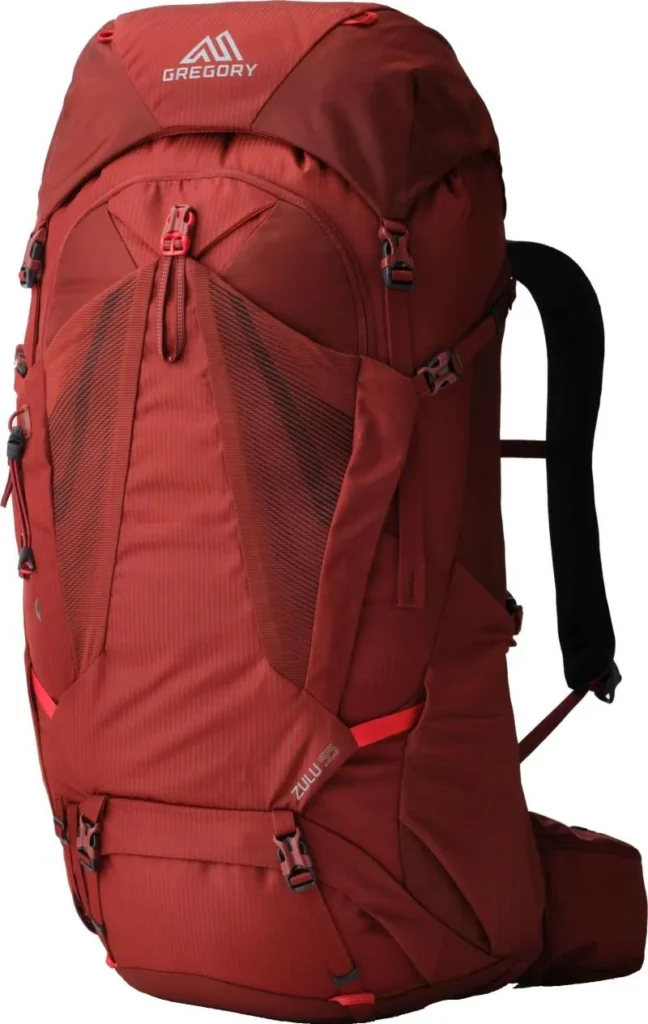
The Zulu has a U-zip front panel opening in addition to standard top access, which is genuinely useful on trail. Rather than unpacking from the top to get to something buried in the middle, you can unzip the front and access the main compartment directly. Combined with a separate bottom sleeping bag compartment and two top lid pockets, the packing logic is well thought out.
The hip belt pockets are oversized — large enough for a phone, snacks, sunscreen, and a small first aid kit without needing to stop and remove the pack. This is the kind of detail that seems minor until you are doing it twenty times a day on a long trail.
Recycled Materials
The Zulu 55 is built from recycled polyester throughout. For eco-conscious hikers this is a genuine factor, not a marketing afterthought. Gregory has made a real commitment to sustainable materials across the range and the build quality does not suffer for it.
The Weight Question — Honest Assessment
At 1.91kg, the Zulu 55 is noticeably heavier than ultralight alternatives. The Osprey Exos 58 is 1.18kg and the Granite Gear Crown3 60 is around 0.9kg — meaning you are carrying up to 1kg more pack weight before you add a single item of gear.
Whether that matters depends entirely on what you value. The weight difference is real but the tradeoff is equally real — the Zulu’s heavier construction is directly linked to its more robust frame, heavier-duty fabric, and beefier hip belt that can handle loads up to 22.7kg. If you are carrying 8–10kg on a well-optimised ultralight setup, that extra pack weight is disproportionate. If you are carrying 18kg on a 7-day remote trip, the load support the Zulu provides is worth considerably more than the weight penalty.
The mistake most hikers make is focusing on pack weight in isolation. Saving 250g on a pack while carrying 500g of redundant gear elsewhere is not a useful trade. Focus on your total carry weight, then choose a pack appropriate for that load.
Gregory Zulu 55 vs Osprey Exos 58
These are the two most directly comparable packs at this price point for Australian buyers.
| Feature | Gregory Zulu 55 | Osprey Exos 58 |
|---|---|---|
| Weight | 1.91 kg | 1.18 kg |
| Capacity | 55 L | 58 L |
| Max carry weight | 22.7 kg | ~20 kg |
| Hip belt | FreeFloat 3D, oversized pockets | Standard, pockets included |
| Torso adjustment | 3.5 inches | Fixed (size-specific) |
| Back panel | Tensioned mesh | Airspeed trampoline |
| Australian price | $400-$500 | $400–$450 |
| Local availability | Wild Earth, Ultralight Gear AU | Paddy Pallin, Anaconda, wide |
| Recycled materials | Yes | Partial |
The Zulu 55 is heavier but cheaper, more adjustable, and rated for heavier loads. The Exos 58 is lighter, slightly more expensive, and better suited to hikers prioritising weight savings on a moderate load. They serve slightly different buyers — the Zulu for load-focused multi-day hiking, the Exos for weight-conscious hikers carrying a leaner kit.
If you are on a budget and carrying heavier loads, the Zulu 55 is the better buy. If weight is your priority and budget allows, the Exos 58 is the stronger choice.
See how it compares in our Osprey Exos 58 vs Gregory Zulu 55 head-to-head.
Australian Availability
Unlike some Gregory models, the Zulu 55 is well stocked in Australia. You can find it at Wild Earth and Ultralight Gear Australia locally, as well as on Amazon AU. Prices range from $400-$500 AUD depending on size and retailer, which makes it one of the better value load-hauling packs available to Australian buyers without paying international shipping.
Verdict
The Gregory Zulu 55 is a well-built, load-focused multi-day pack that delivers genuine comfort when it counts — carrying heavy loads across multiple days on serious Australian and New Zealand trails. It is not the lightest option and it does not pretend to be. What it is, is a reliable, adjustable, well-organised pack that handles real weight without destroying your body.
For hikers doing the Overland Track, Larapinta, or similar multi-day routes with a full camping kit, it deserves serious consideration.
Best for: Multi-day hiking with 12–20kg loads, Overland Track, Larapinta, New Zealand Great Walks, hikers needing adjustable fit
Not for: Ultralight hikers, day hikers, expedition trips needing 70L+, long-term travel backpackers
4 thoughts on “Gregory Zulu 55 Review”