Bottom Line Up Front
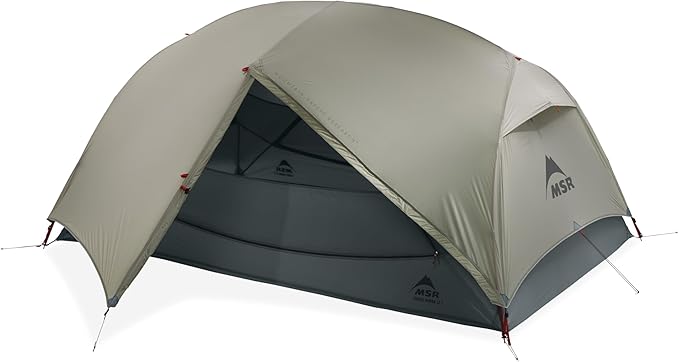
The MSR Hubba Hubba LT 2 is the most livable fully freestanding two-person backpacking tent available to Australian hikers. Its solution-dyed micromesh body delivers exceptional breathability — particularly relevant for Australian summer conditions — while the true rectangular non-tapered floor maximises interior space for two people across multiple nights. Combined with a fully freestanding design that handles rocky Australian terrain without friction, it is the benchmark two-person tent in its category.
At 1.54kg it is heavier than the Tiger Wall UL2 at 1.13kg, but split between two hiking partners that becomes 770g each — a weight that is genuinely competitive. For hiking couples who share a tent regularly and want maximum livability, freestanding reliability, and proven MSR quality — the Hubba Hubba LT 2 is the tent to buy.
Key Specifications
| Feature | Value |
|---|---|
| Weight | 1.54kg |
| Capacity | 2 person |
| Architecture | Fully freestanding |
| Floor design | True rectangular, non-tapered |
| Floor area | 32 sq ft (2.95 sqm) |
| Peak height | 102cm (40 inches) |
| Doors | 2 |
| Vestibules | 2 (16 sq ft total) |
| Body fabric | Solution-dyed micromesh |
| Pole system | DAC |
| Waterproofing | PFAS-free DWR, taped seams |
| Price (AUD) | ~$700–$800 |
| Australian availability | Excellent |
| Best use | Multi-day backpacking, 3-season |
Who This Tent Is For
The Hubba Hubba LT 2 is built for hiking couples and pairs who regularly share a tent across multiple nights and want the best combination of interior space, ventilation, and freestanding convenience available.
It suits:
- Regular hiking partners doing multi-night trips where interior comfort matters over time
- Hikers on rocky or unpredictable terrain where freestanding setup is a genuine advantage — Blue Mountains, alpine NSW, off-track routes
- Couples who split the carry — 770g each at 1.54kg split is workable for most multi-day setups
- Australian summer hikers who need maximum tent ventilation in warm conditions
- Hikers who value the symmetrical floor for top-to-tail sleeping and gear organisation
Do not buy the Hubba Hubba LT 2 if:
- You primarily hike solo — 1.54kg solo is on the heavier side, the Tiger Wall UL2 at 1.13kg is better suited to single use
- Weight is your absolute priority — the Tiger Wall UL2 split between two hikers is 565g each versus 770g each for the LT 2
- Budget is a primary concern — the Nemo Hornet 2P at $480–$580 covers most of the same use cases at significantly lower cost for pairs comfortable with a cosier interior
The Fully Freestanding Advantage
This is the LT 2’s most practical differentiator over the Tiger Wall UL2 and Nemo Hornet 2P.
A fully freestanding tent stands completely on its own without staking. You pitch it, pick it up, move it, and only stake out once you are happy with the spot. On rocky Australian terrain — Blue Mountains, granite slabs in alpine NSW, informal bush camping spots — the ability to pitch anywhere and adjust freely is a genuine advantage that compounds across a multi-day trip.
The freestanding design adds weight compared to semi-freestanding alternatives. But at 770g per person when split, the LT 2 is workable for most Australian multi-day setups and the convenience dividend is real.
The Micromesh Body — The LT 2’s Key Differentiator
The most significant upgrade in the LT 2 over previous Hubba Hubba models is the solution-dyed micromesh tent body. The interior is primarily fine mesh rather than solid nylon — providing exceptional breathability, superior condensation management, and outstanding stargazing on clear nights.
For Australian conditions this is genuinely relevant. In warm summer temperatures on the Larapinta or Blue Mountains routes, a mesh body allows maximum airflow through the tent, keeping the interior cooler and reducing the clammy feeling of a fully enclosed nylon shelter. On clear nights in the outback, lying in a mesh tent under the stars is an experience in itself.
The trade-off is privacy and cold-weather performance. In cold alpine conditions the mesh body provides less insulation than a solid nylon interior — the rainfly compensates for this but it is worth knowing. In populated campgrounds the mesh interior offers less privacy than a solid-fabric tent. For the majority of Australian backcountry camping on established trails neither of these is a practical concern.
The Rectangular Floor — Comfort Over Multiple Nights
The LT 2 uses a true rectangular non-tapered floor at 32 sq ft — the largest floor area in this comparison category and specifically designed to accommodate modern rectangular sleeping pads without awkward diagonal placement.
For two people across multiple nights, the symmetrical floor enables top-to-tail sleeping — one person’s head at each end — with gear distributed on opposite sides rather than piling in the middle. Over a six-day Overland Track trip where you spend genuine time inside the tent, this organisation translates directly into comfort and reduced friction. It is the kind of design detail that sounds minor on a spec sheet and feels significant by day four.
Interior Features — More Than You Expect
The LT 2 has a noticeably more feature-rich interior than most comparable tents:
- Cable ports on all interior pockets — run charging cables and headphone cords neatly
- Overhead gear loft pockets — headlamps, sunglasses, quick-access items off the floor
- Built-in clothesline — hang damp socks, gloves, or base layers inside the tent to dry overnight
- Gear loft at the head of the tent for small items
None of these are essential features, but collectively they make the LT 2 feel like a considered, well-designed shelter rather than a minimalist ultralight tent that happens to fit two people.
Weather Performance
The PFAS-free DWR coating on the rainfly handles sustained Australian rain reliably, with fully taped seams throughout. The StayDry rain gutters on vestibule doors and kickstand vents balance weather protection with airflow. The symmetrical design allows the rainfly to be rolled back completely for stargazing — particularly good with the mesh interior.
The DAC poles are durable and lightweight, providing solid structure in wind. Eight Mini Groundhog stakes are included — better performance in varied Australian ground conditions than generic stakes.
For storage: keep the fly loosely stuffed rather than tightly compressed between trips, especially in humid Australian climates where compressed lightweight fabrics can deteriorate over time.
MSR Hubba Hubba LT 2 vs Tiger Wall UL2 vs Sea to Summit Telos TR2
| Feature | Hubba Hubba LT 2 | Tiger Wall UL2 | Telos TR2 |
|---|---|---|---|
| Weight | 1.54kg | 1.13kg | 1.48kg |
| Per person (split) | 770g | 565g | 740g |
| Architecture | Fully freestanding | Semi-freestanding | Fully freestanding |
| Peak height | 102cm | 107cm | 110cm |
| Floor area | 32 sq ft | 28 sq ft | 27.9 sq ft |
| Body fabric | Micromesh | Nylon/mesh blend | Nylon/mesh blend |
| Breathability | ✅ Excellent | Good | Good |
| Split carry system | Manual | Manual | FairShare 3-bag |
| Price (AUD) | $700–$800 | $580–$650 | $849 |
| Best for | Ventilation, couples, space | Weight-focused pairs | Maximum features |
The LT 2 has the largest floor area of any tent in this comparison and the best ventilation thanks to its micromesh body. It sits between the Tiger Wall and Telos in price — cheaper than the Telos but more expensive than the Tiger Wall. For Australian summer hiking where ventilation matters, it has a clear advantage over both.
Australian Trail Recommendations
Hubba Hubba LT 2 — best suited for:
- Overland Track (Tasmania) — six nights, two people, rectangular floor and freestanding design earn their place
- Larapinta Trail (NT) — hot conditions where the micromesh body provides genuine ventilation advantage
- Blue Mountains multi-day routes (NSW) — rocky terrain where freestanding setup is a practical advantage
- Grampians Peaks Trail (Victoria) — varied terrain, multi-night use
- New Zealand Great Walks — variable terrain and weather, LT 2 handles both well
Australian Availability
The MSR Hubba Hubba LT 2 is available at Paddy Pallin, Snowys, Wild Earth, Ultralight Gear Australia, and on Amazon AU. Pricing ranges from $700–$800 AUD. When purchasing, confirm you are buying the LT 2 hiking tent rather than the Hubba Hubba Bikepack — both appear on Amazon AU searches and the bikepacking model has shorter poles designed for handlebar attachment.
Verdict
The MSR Hubba Hubba LT 2 is the most livable and best-ventilated fully freestanding two-person tent available to Australian hikers. The micromesh body, rectangular floor, and freestanding design combine to deliver a tent that is genuinely comfortable across multiple nights in Australian conditions — particularly in warm summer environments where breathability matters most.
The weight and price premium over the Tiger Wall UL2 is real. For regular hiking pairs who value that combination of space, ventilation, and freestanding reliability, the LT 2 earns its position at the top of the category.
Best for: Regular hiking pairs, summer Australian conditions, Overland Track, Larapinta, Blue Mountains, Grampians, hikers wanting maximum interior space and ventilation
Not for: Solo hikers, weight-minimisers, budget-constrained buyers, cold weather alpine use where mesh body is a limitation
Check Price on Amazon
Check Price on eBay
TrailKitLab — written by hikers, for hikers
3 thoughts on “MSR Hubba Hubba LT 2 Review — The Best Freestanding Two-Person Tent for Australian Hikers?”