Bottom Line Up Front
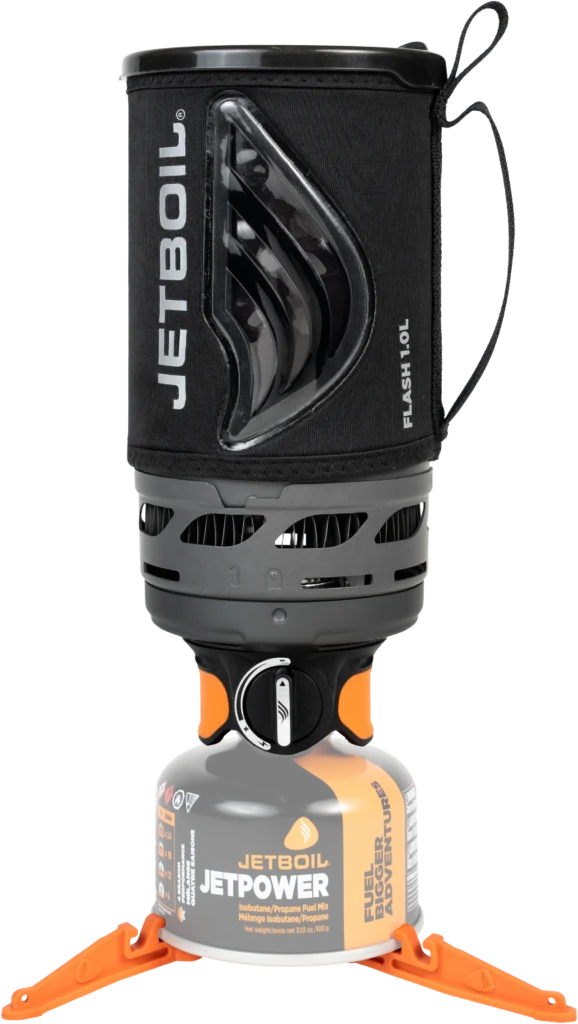
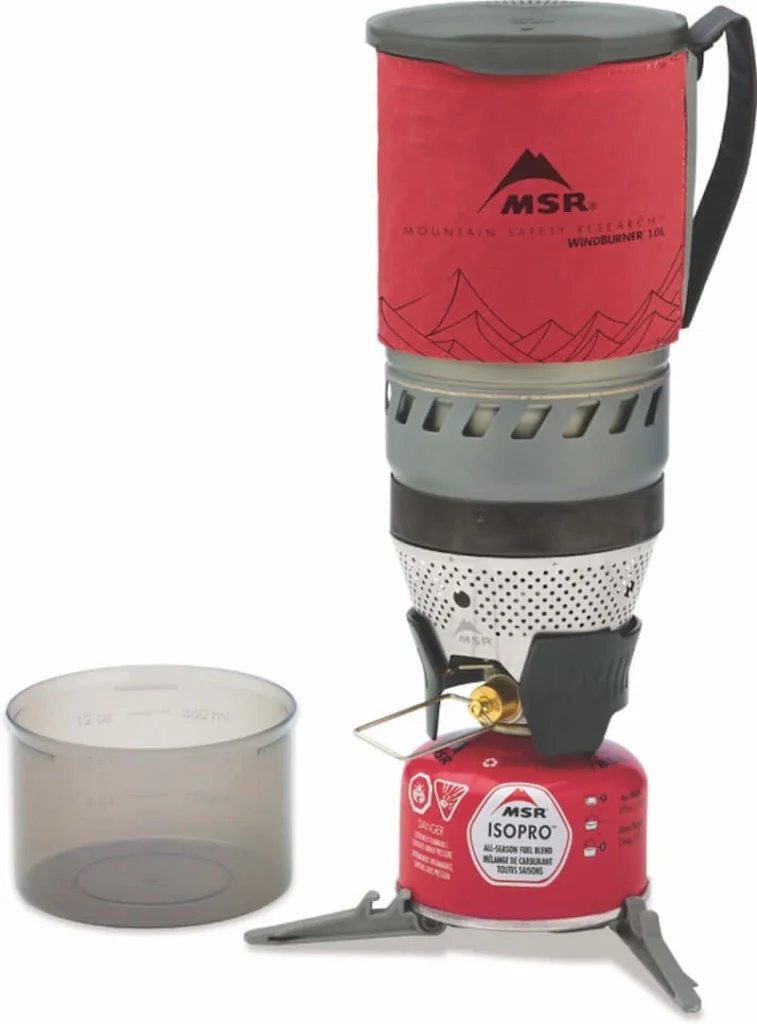
Both the MSR WindBurner and Jetboil Flash are market-leading integrated canister stoves that do the same core job well — boiling water fast, in a compact self-contained system, with minimal fuss on trail. They are not for ultralight hikers chasing every gram. They are for serious multi-day hikers who want a reliable, convenient system that works in real conditions without requiring a separate pot, lid, or cooking setup.
If you hike primarily in sheltered or moderate conditions and want the best value, buy the Jetboil Flash. If you regularly hike in exposed, mountainous, or alpine terrain where wind is a genuine factor, the MSR WindBurner justifies its higher price. For most Australian hikers doing trails like the Overland Track or Larapinta, the Jetboil Flash is the more practical choice.
Key Specifications
| Feature | MSR WindBurner | Jetboil Flash |
|---|---|---|
| System weight | 453g | 371g |
| Boil time (500ml, no wind) | ~2.5 mins | ~2.5 mins |
| Boil time (500ml, windy) | ~2.5 mins | ~6 mins |
| Capacity | 1L | 1L |
| Ignition | Manual (no piezo) | Integrated piezo |
| Simmer control | Poor | Moderate |
| Price (AUD) | ~$280–$320 | ~$180–$220 |
| Australian availability | Good | Excellent |
| Best for | Alpine, exposed terrain | General multi-day hiking |
What These Stoves Actually Are
Both the WindBurner and Jetboil Flash are integrated canister stove systems — meaning the burner, pot, and lid come as a single self-contained unit that stacks together for carrying and screws onto an isobutane/propane canister for cooking. There is no separate pot to pack, no fidgeting with connecting components on a cold morning, and no waiting around — you attach the canister, ignite, and you have boiling water in under three minutes.
This convenience is the core reason hikers choose integrated systems over traditional separate stove and pot setups. They are not the lightest option — a Soto Windmaster with a titanium pot will save you significant weight — but they are the most convenient, and convenience compounds over a multi-day trip when you are tired, cold, and just want a hot meal without thinking about it.
Gas canisters are widely available across Australia at Anaconda, Paddy Pallin, Snowys, and most outdoor retailers. Cost is reasonable and a 100g canister will last 5–7 days of typical trail use for one person.
Wind Performance — The Real Difference
This is where the two stoves genuinely diverge and it is worth being honest about what that means in practice.
The MSR WindBurner uses a radiant burner enclosed within a metal cone that shields the flame almost completely from wind. In testing, its boil time remains consistent regardless of conditions. The Jetboil Flash uses a more exposed flame design — in calm conditions it matches the WindBurner, but in a 10mph wind its boil time more than doubles.
Here is the nuance that most reviews miss: getting either of these stoves lit in wind is the real problem, not keeping them burning once they are going. A slight breeze can make ignition genuinely difficult. Once lit, both stoves will handle moderate wind without going out — it would take serious gale conditions to extinguish either. The WindBurner has no piezo igniter at all, meaning you must use a separate lighter every time regardless of conditions. The Jetboil Flash has a built-in piezo igniter that works well in calm conditions but can be unreliable in wind — and some units develop igniter failures over time, leaving you dependent on a backup lighter anyway.
The practical lesson: always carry a backup lighter regardless of which stove you choose. It is not optional kit.
For most Australian hiking conditions — Overland Track, Larapinta, Blue Mountains, New Zealand — wind is an occasional nuisance rather than a constant threat. The Jetboil Flash handles these conditions adequately. Where the WindBurner earns its premium price is in genuinely exposed alpine environments: the Australian Alps in winter, high-altitude Snowy Mountains routes, or subalpine terrain where sustained wind is the norm rather than the exception.
Boil Time — Does It Actually Matter?
Both stoves boil 500ml in roughly 2.5 minutes in calm conditions. In practice, this difference is largely irrelevant for most hikers.
When you stop for lunch on a long day, you are taking off your pack, finding somewhere to sit, getting your food out, and letting your legs recover. The stove finishing 90 seconds faster is not the bottleneck in that process. Similarly at camp in the evening, you are setting up your shelter, sorting your gear, and winding down — the stove is doing its job in the background.
Where fast boil time does matter is if you are doing serious mileage and treat your lunch stop as a purely functional fuel stop — in which case the Jetboil Flash’s speed in calm conditions is a minor but real advantage.
Simmering — Not Worth Worrying About
Neither stove is designed for simmering and neither does it well. The WindBurner is essentially an on/off system optimised purely for boiling. The Jetboil Flash has marginally more flame control and can be dialled down to a slow boil for heating ration packs or similar, but calling it a simmer is generous.
For the vast majority of hikers rehydrating freeze-dried meals, making coffee, or heating soup, boiling water is all you need. If you want genuine cooking capability on trail, neither of these stoves is the right tool — you would be better served by a separate lightweight stove like the Soto Windmaster paired with a wider pot.
Weight and Packability
At 453g versus 371g, the WindBurner is 82g heavier than the Jetboil Flash. Both stoves pack their canister inside the pot for carrying, making them compact self-contained units.
The honest truth is that hikers who are genuinely concerned about weight should not be buying either of these stoves. At this weight category, a Soto Windmaster at 67g plus a 400ml titanium pot at around 80g gives you a complete cooking system under 150g — less than a third of either integrated system. The tradeoff is losing the convenience of the integrated design and needing to manage separate components.
If you have decided that an integrated system is what you want, the 82g difference between the WindBurner and Flash is not a meaningful factor. Choose based on the conditions you hike in, not the weight difference.
Which Should Australian Hikers Buy?
Buy the Jetboil Flash if:
- You hike primarily in sheltered or moderate conditions
- Budget is a factor — it costs $80–$100 AUD less
- You want the widest availability and easiest servicing in Australia
- You are doing trails like the Overland Track, Larapinta, Blue Mountains, or New Zealand’s Great Walks
- You want a proven, durable system with years of reliability behind it
Buy the MSR WindBurner if:
- You regularly hike in exposed alpine environments — Australian Alps, high Snowies, subalpine winter routes
- Wind performance consistency is non-negotiable for your trips
- You prefer a stove with no electronic igniter to fail (and are happy using a lighter every time)
- Budget is less of a concern and you want the more robust long-term option
Consider the Soto Windmaster instead if:
- Weight and pack space are your primary concern
- You are comfortable managing separate stove and pot components
- You want excellent wind resistance without the bulk of an integrated system
Australian Availability and Pricing
Both stoves are well stocked across Australian outdoor retailers including Paddy Pallin, Anaconda, Snowys, and Wild Earth. The Jetboil Flash typically retails between $180–$220 AUD and the MSR WindBurner between $280–$320 AUD. Both are also available on Amazon AU and eBay AU.
Isobutane/propane canisters compatible with both stoves are widely available at the same retailers and are not expensive — a 100g canister costs around $8–$12 AUD and will last a solo hiker approximately 5–7 days of typical use.
Verdict
These are the two best integrated canister stoves on the Australian market. They are not competing for the same buyer in every case — the Jetboil Flash is the better all-round choice for most Australian hikers at a more accessible price, while the MSR WindBurner is the specialist choice for alpine and exposed conditions where wind performance cannot be compromised.
For a week on the Overland Track or Larapinta, take the Jetboil Flash. For a winter route in the Australian Alps, the WindBurner earns its price premium.
Whichever you choose, carry a backup lighter. Every time.
Jetboil Flash — best for: General multi-day hiking, moderate conditions, budget-conscious buyers, Overland Track, Larapinta, New Zealand
Check Price on Amazon
Check Price on eBay
MSR WindBurner — best for: Alpine terrain, exposed routes, Australian Alps winter hiking, reliability in extreme conditions