Bottom Line Up Front
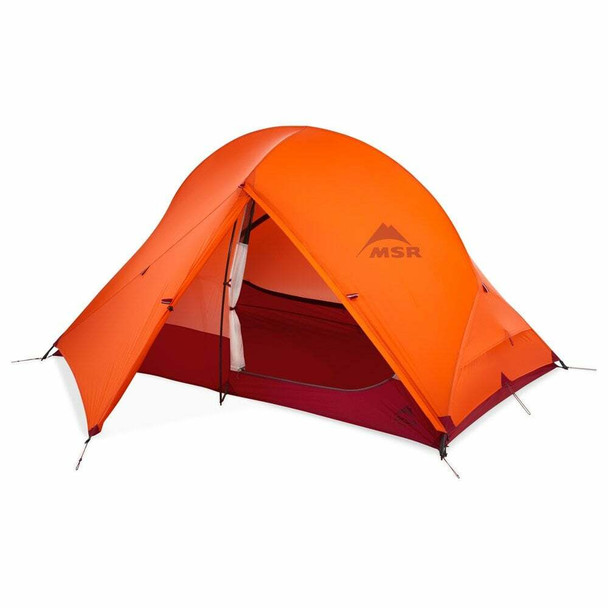
The MSR Access 2 is the only tent in our lineup built specifically for four-season use — designed for winter backcountry conditions, snow loading, and cold weather camping where a standard three-season tent is not adequate. It bridges the gap between lightweight three-season backpacking tents and heavy expedition mountaineering shelters, delivering genuine winter-grade protection at 1.64kg.
For Australian hikers venturing into the Snowy Mountains in winter, Tasmanian alpine routes in June and July, or New Zealand’s South Island in deep winter — this is the tent. For three-season Australian hiking on established trails, any of the other tents in this comparison will serve you better at lower weight and cost.
Key Specifications
| Feature | Value |
|---|---|
| Minimum weight | 1.64kg |
| Capacity | 2 person |
| Architecture | Freestanding |
| Floor area | 29 sq ft (2.69 sqm) |
| Peak height | 107cm (42 inches) |
| Doors | 2 |
| Vestibules | 2 with snow flaps |
| Poles | Easton Syclone composite |
| Frame | Central-support snow loading design |
| Seasons | 4 |
| Price (AUD) | ~$900–$1,100 |
| Australian availability | Good |
| Best use | Winter alpine, ski touring, 4-season |
Who This Tent Is For
The Access 2 is built for a specific buyer: hikers, ski tourers, splitboarders, and snowshoers who camp in genuine winter alpine conditions where overnight snow loading, sustained wind, and freezing temperatures are realistic scenarios.
In Australian terms this means:
- Winter camping in the Snowy Mountains — Mt Kosciuszko area, Main Range
- Tasmanian alpine routes in winter — Cradle Mountain plateau, Western Arthurs in June/July
- New Zealand South Island in deep winter — mountain routes, ski touring approaches
- Any Australian route where overnight temperatures drop well below freezing and snow is possible
Do not buy the Access 2 if:
- You hike three-season Australian trails — the Overland Track in summer/autumn, Larapinta, Blue Mountains. Any three-season tent in this comparison handles these conditions at less weight and cost
- You are doing true expedition mountaineering above the snowline in severe conditions — the Access 2 is rated for near-treeline conditions, not extreme alpine objectives where a full mountaineering tent like the MSR Remote 2 is needed
- Budget is a concern — at $900–$1,100 AUD it is the most expensive tent on the site
What Makes It a 4-Season Tent
The Access 2 differs from three-season tents in several fundamental ways that matter in genuine winter conditions.
Limited mesh on the tent body. Three-season tents use extensive mesh for ventilation in warm weather. The Access 2 uses minimal mesh — prioritising heat retention on cold nights over airflow. In winter alpine conditions where air temperature is well below zero, keeping warm air inside the tent is more important than ventilation.
Central-support frame for snow loading. Standard backpacking tent poles are designed to flex under wind loads. The Access 2’s central-support frame geometry is specifically engineered to distribute the weight of overnight snow accumulation — preventing the tent from collapsing under a heavy snowfall while you sleep.
Easton Syclone composite poles. Aluminium poles can become brittle and snap in very cold temperatures. The Easton Syclone composite poles in the Access 2 are designed to remain flexible and resist breaking in freezing conditions — an important safety consideration for genuine winter camping.
Snow flaps on vestibules. The vestibules have snow flaps designed to seal the base against drifting snow being driven under the fly by wind — a feature absent on three-season tents.
The Honest Limitations
The Access 2 is not a true expedition mountaineering tent and MSR is clear about this. It is designed for less severe winter conditions — near treeline, protected valleys, ski touring approaches — not sustained above-treeline exposure in extreme alpine storms.
In these moderate winter conditions it excels. Pushed into genuinely severe above-treeline conditions — extended exposure on high ridges in heavy wind and snowfall — it shows the limits of its light construction. The rainfly does not extend fully to the ground, leaving a small gap that can allow snow to drift inside in high wind. For serious alpine objectives, MSR’s own Remote 2 or a dedicated mountaineering tent is the appropriate choice.
For the vast majority of Australian winter alpine use — ski touring in the Snowies, Tasmanian alpine camping, New Zealand winter routes near treeline — the Access 2 is well suited and more practical than heavier alternatives.
Two-Person Use — Be Realistic
Reviewers consistently note the Access 2 is more comfortable as a roomy solo tent than as a two-person tent, particularly for larger hikers. Two people with full winter gear — bulky sleeping bags, down jackets, insulated pants, winter boots — will find the interior snug.
The two large vestibules partially solve this by providing gear storage outside the sleeping area. With winter kit stored in the vestibules and sleeping bags inside, two people can sleep comfortably. The split carry is also efficient — at 1.64kg divided between two hikers, each person carries 820g of tent for genuine four-season protection.
Hikers over 190cm should note the tent length at the tapered ends — tall hikers may find their sleeping bag in contact with the tent walls.
MSR Access 2 vs Three-Season Alternatives
| Feature | Access 2 | Hubba Hubba LT 2 | Tiger Wall UL2 |
|---|---|---|---|
| Weight | 1.64kg | 1.54kg | 1.13kg |
| Seasons | 4 | 3 | 3 |
| Snow loading frame | ✅ Yes | ❌ No | ❌ No |
| Snow flaps | ✅ Yes | ❌ No | ❌ No |
| Mesh body | Limited | Micromesh | Partial mesh |
| Warmth retention | ✅ Excellent | Moderate | Moderate |
| Price (AUD) | $900–$1,100 | $700–$800 | $580–$650 |
| Best for | Winter alpine | 3-season pairs | Ultralight 3-season |
The 100g weight difference between the Access 2 and Hubba Hubba LT 2 is negligible. The meaningful difference is seasonal capability — the Access 2 handles conditions the Hubba Hubba LT 2 should not be used in. If you are ever camping in conditions where snow loading overnight is a realistic possibility, the Access 2 is the appropriate shelter.
Australian Trail and Conditions Recommendations
Access 2 — specifically suited for:
- Snowy Mountains winter (NSW/VIC) — Main Range, Main Range circuit in winter, Mt Kosciuszko approaches
- Tasmanian alpine winter — Cradle Mountain plateau June/July, Western Arthurs in winter, Walls of Jerusalem
- New Zealand South Island winter — ski touring approaches, Fiordland winter routes
- Any Australian route where overnight snow is possible and temperatures drop well below zero
Use a three-season tent instead for:
- Summer and autumn on any standard Australian trail — Overland Track (Oct–April), Larapinta, Blue Mountains, Grampians
Australian Availability
The MSR Access 2 is available at Paddy Pallin, Wild Earth, Snowys, and on Amazon AU. Pricing ranges from $900–$1,100 AUD. A footprint is strongly recommended for snow and ice camping to protect the floor and enable fast-fly setup.
Verdict
The MSR Access 2 is the right tent for a specific and important use case — Australian and New Zealand winter alpine camping where a three-season tent is not adequate. It delivers genuine four-season protection at a weight that remains practical for human-powered trips, backed by MSR’s 50-year track record in technical outdoor gear.
For three-season Australian hiking, choose any other tent in this comparison. For winter alpine conditions where you need a tent that handles overnight snow loading and sustained cold — the Access 2 is the right shelter.
Best for: Winter alpine camping, ski touring, Snowy Mountains winter, Tasmanian alpine winter, New Zealand South Island winter, splitboarding approaches
Not for: Three-season Australian hiking, budget-conscious buyers, true expedition mountaineering above treeline in extreme conditions
TrailKitLab — written by hikers, for hikers