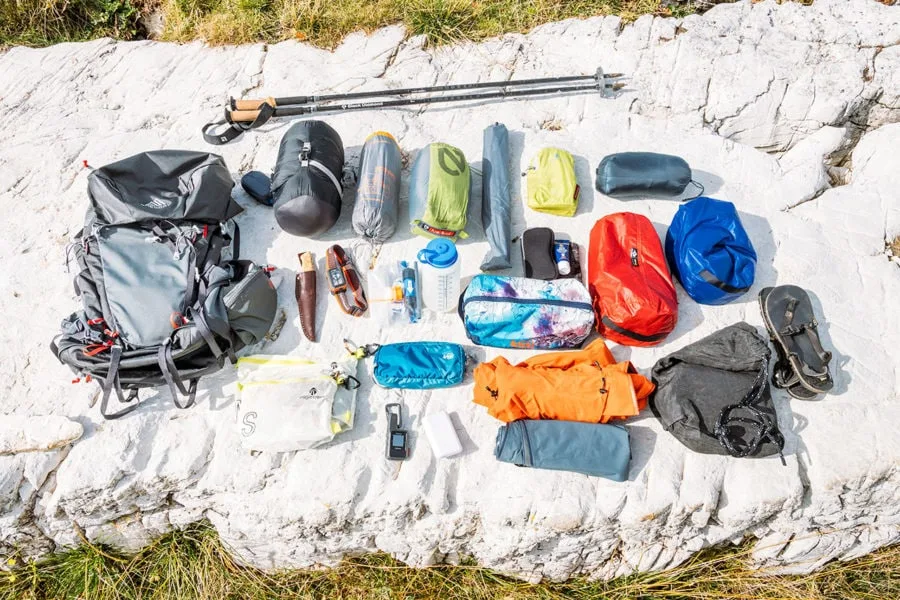
Building an ultralight setup starts with understanding exactly what you need – and eliminating everything you don’t.
This checklist covers all essential categories for ultralight backpacking in 2026, helping you build a lightweight, efficient system for any trip.
What Is an Ultralight Setup?
Ultralight backpacking focuses on reducing base weight while maintaining safety and functionality.
A typical setup includes:
- Shelter
- Sleep system
- Backpack
- Clothing
- Cooking system
- Water filtration
- Essentials and accessories
The goal is to carry only what is necessary for your specific conditions.
The Big 3
The most significant weight savings come from optimising these three items.
Shelter
Your shelter is one of the heaviest items in your pack.
See top options here:
Best Ultralight Tents for Backpacking 2026
Backpack
Ultralight backpacks are designed for lighter loads and prioritise simplicity.
Compare current options:
Best Ultralight Backpacks 2026
Sleeping System
This includes your sleeping bag or quilt and sleeping pad.
Explore recommended options:
Best Ultralight Sleeping Bags 2026
Water Filtration
Reliable access to clean water is essential on any trip.
Common options include:
- Squeeze filters
- Soft flask systems
- Filter bottles
- Purification tablets
Compare the best systems here:
Best Ultralight Water Filters for Backpacking (2026)
You can also explore chemical treatment options:
Best Water Purification Tablets for Backpacking (2026)
Cooking System
Your cooking setup should be lightweight and simple.
Typical components:
- Compact stove
- Lightweight pot
- Fuel
See recommended options:
Best Ultralight Cooking Gear
Clothing
Clothing should be minimal, versatile, and suited to your conditions.
A basic setup includes:
- Base layer
- Insulation layer
- Waterproof layer
- Hiking clothes
- Spare socks
Essentials and Accessories
These items are important for safety and convenience:
Navigation
- Map
- Compass or GPS
Lighting
- Headlamp
First Aid
- Basic kit
Repair Kit
- Tape
- Small repair items
Hygiene
- Minimal toiletries
Optional Items
These depend on your preferences and trip conditions:
- Trekking poles
- Ultralight chair
- Electronics
- Additional clothing
Each item should be evaluated carefully based on weight and necessity.
How to Use This Checklist
Step 1: Focus on the Big 3
This is where the largest weight savings are achieved.
Step 2: Build around your trip
Adjust your setup based on:
- Climate
- Terrain
- Duration
Step 3: Remove unnecessary items
Eliminate anything that does not serve a clear purpose.
Step 4: Refine over time
Ultralight setups improve through iteration and experience.
Final Thoughts
An ultralight gear checklist is not about removing comfort – it is about improving efficiency.
By focusing on essential gear and refining your system over time, you can significantly reduce pack weight while maintaining performance and safety. It’s important to do some practice runs in order to optimise your setup before committing to multi-day hikes.